
Digital marketing for dental clinics should help the right patients find relevant services, understand their options, and take the next step toward a professional consultation. A joined-up strategy connects local search, useful treatment pages, paid search campaigns, educational content, and a reliable enquiry process.
Digital marketing for dentists works best when every channel supports the patient journey. People researching dental implants, restorative treatments, or clear aligners may have questions about suitability, treatment stages, cost, discomfort, and recovery. Clear, responsible information helps them understand what to ask during a consultation.
A dental clinic’s online presence should reflect the quality of its real-world care. The website, Google Business Profile, advertising, educational videos, reviews, and reception follow-up should share accurate information and make it easy to request an appointment.
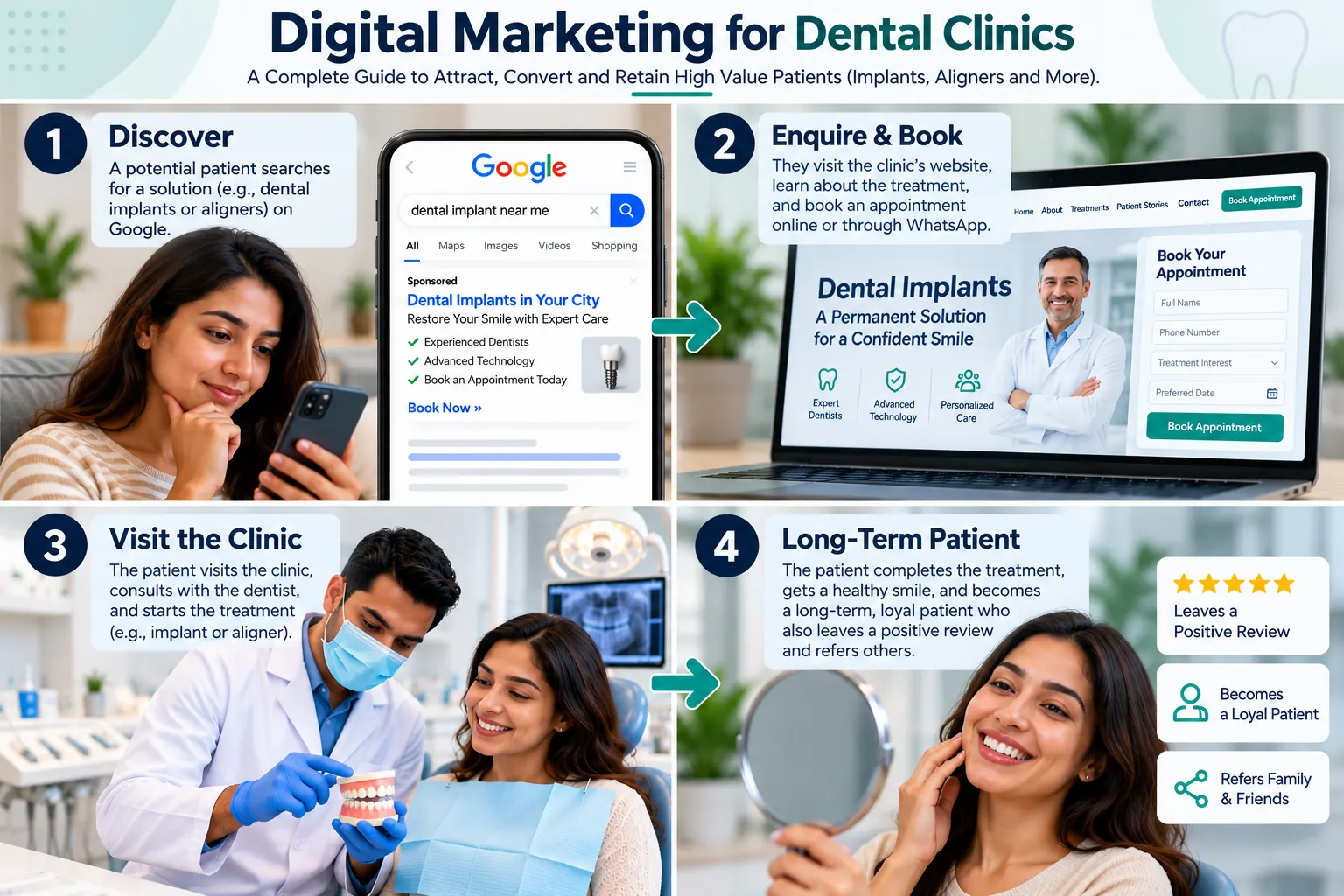
Why Generic Agencies Fail at Digital Marketing for Dental Clinics
A specialist dental marketing agency understands the difference between a casual enquiry and a patient researching a specific procedure. Generic campaigns can generate clicks or social engagement without bringing relevant consultation requests. Dental clinics need a strategy based on the treatments offered, service area, patient questions, and team capacity to respond.
The 4-Stage Patient Acquisition System for Digital Marketing for Dental Clinics
A practical digital marketing for dental clinics system combines local visibility, high-intent advertising, educational content, and timely follow-up. Each stage supports a different part of the patient journey: discovery, consideration, confidence, and booking.
Stage 1: Local SEO for Dentists and Google Maps Visibility
Local SEO for dentists helps nearby patients find a clinic when they search for dental care in their area. Maintain the Google Business Profile with the correct name, address, phone number, hours, website, and relevant categories. Keep information consistent across trusted directories and create useful pages for services the clinic genuinely provides.
Stage 2: Dental PPC Advertising for Dental Implant Leads
Dental PPC advertising can reach people actively searching for a treatment or consultation. Separate campaigns by service and search intent. Choose geographic targeting based on the clinic’s realistic patient catchment area, and monitor the actual search terms triggering ads.
Campaign group A: Dental implant enquiries
Dental implant lead campaigns should answer common questions before a patient requests an appointment. Depending on the clinic’s services, a landing page can explain the consultation process, diagnostic assessment, treatment stages, clinician credentials, factors affecting cost, and available payment options. Do not present an indicative price as a universal quote or promise every patient is eligible.
Campaign group B: Clear aligner marketing
Clear aligner marketing should help prospective patients understand whether an assessment may be appropriate. Explain the initial consultation, factors that influence treatment duration and cost, and why suitability must be assessed by a qualified dental professional. Use a clear call to action such as “Request a consultation” instead of promising a specific result.
Stage 3: Educational Video Marketing That Addresses Dental Anxiety
Educational video content can make unfamiliar dental procedures easier to understand. A dentist can explain what happens during a consultation, how a procedure is assessed, what questions to ask, and what aftercare may involve. Keep language clear, distinguish general education from personal diagnosis, and encourage viewers to discuss their own circumstances with a dental professional.
Stage 4: WhatsApp Follow-up for Dental Practice Patient Acquisition
WhatsApp can make it easier for interested patients to ask questions and request appointments when handled responsibly. Respond with clinic-approved information, avoid requesting sensitive medical records through an unsecured chat, and route clinical questions to qualified staff rather than trying to diagnose through marketing messages.
Measure What Matters in Dental Clinic Digital Marketing
Dental clinic digital marketing should be measured by meaningful enquiries and appointments, not vanity metrics alone. A monthly report should show which channels attract relevant patients and where prospective patients drop out of the booking process.
Digital marketing for dental clinics should be measured by qualified enquiries, consultations booked, appointments attended, and treatment-plan progression—not just clicks and website traffic.
Ethical and Trustworthy Digital Marketing for Dental Clinics
Ethical digital marketing for dental clinics communicates clearly without misleading patients or guaranteeing clinical outcomes. Keep treatment descriptions factual, substantiate claims, and have clinical information reviewed by the responsible dental professional. Do not publish identifiable patient photographs, testimonials, case details, or treatment images without appropriate informed consent and a review of applicable rules.
Use patient stories, reviews, and clinical images responsibly
Patient trust depends on privacy, honesty, and appropriate consent. Do not alter testimonials in ways that change their meaning, fabricate reviews, imply one patient’s result is typical for everyone, or use before-and-after images without confirming permission and applicable professional requirements.
Helpful external resources for dental practices
How CareGrowth Supports Dental Clinic Patient Acquisition
CareGrowth helps dental clinics connect local visibility, relevant campaigns, educational content, and enquiry follow-up into one coordinated marketing system. We can begin by reviewing the clinic’s services, target area, website, Google Business Profile, advertising activity, and process for handling new enquiries. Recommendations can then be prioritized around the clinic’s goals and available resources.
Digital marketing for dental clinics should support the dental team—not distract it from patient care. A structured plan helps the clinic understand which channels bring relevant enquiries, where the booking experience needs improvement, and which content answers patient questions effectively.
Ready to Improve Digital Marketing for Your Dental Clinic?
Frequently Asked Questions About Digital Marketing for Dental Clinics
What is digital marketing for dental clinics?
Digital marketing for dental clinics uses online channels to help patients discover a practice and understand its services. Common activities include local SEO, a useful website, search advertising, educational content, reputation management, and enquiry follow-up.
Type your paragraph here
What Does Digital Marketing for Dentists Include?
Digital marketing for dentists combines local SEO, Google Ads, educational content, online reputation management, and timely patient follow-up. These strategies help dental practices improve their online visibility, connect with people researching treatments such as dental implants and clear aligners, and turn relevant enquiries into consultations.
Which digital marketing channel should a dental clinic start with?
The best starting channel depends on the clinic’s location, services, competition, and current online presence. Many clinics begin by checking their Google Business Profile, website contact experience, local search visibility, and enquiry-handling process before expanding paid campaigns.
Can Google Ads generate dental implant enquiries?
Google Ads can reach people searching for dental implant information or consultations, but results depend on targeting, budget, competition, landing-page quality, and follow-up. Track qualified enquiries and booked consultations so decisions are based on outcomes.
Why is local SEO important for dentists?
Local SEO for dentists helps nearby patients find accurate clinic information when searching for dental services. A complete business profile, consistent contact details, useful service pages, and authentic reviews support local discoverability and patient confidence.